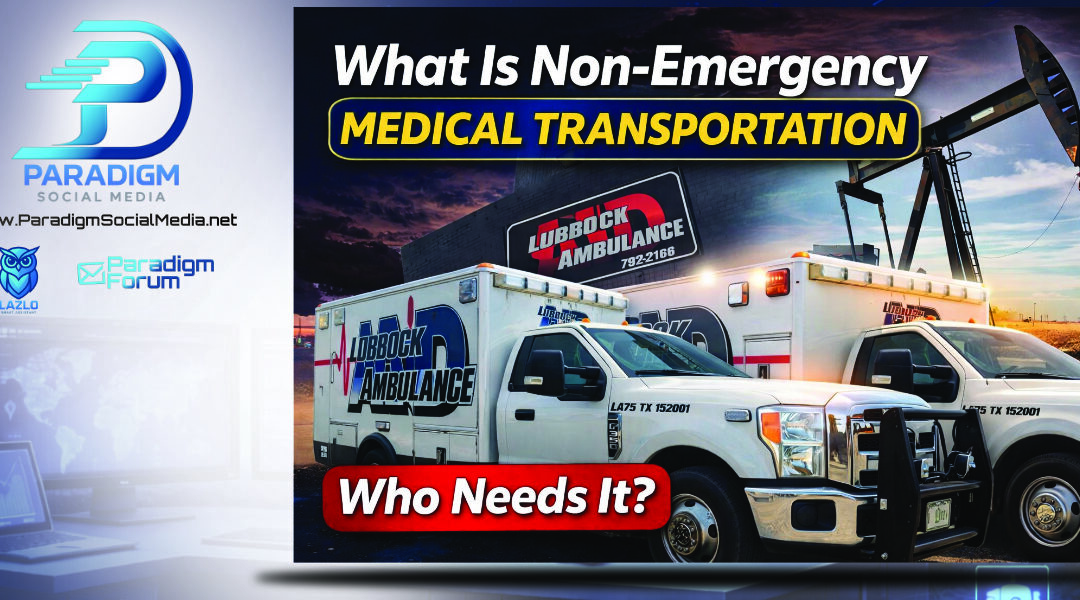
When people hear the word ambulance, they often think of flashing lights, sirens, and life-threatening emergencies. While that is one important role, there is another side of medical transportation that is just as valuable, especially for patients who still need professional care but are not in an emergency situation.
Non-emergency medical transportation, often called NEMT, is designed to help patients get from one place to another safely when their condition requires more support than a standard vehicle can provide.
What Non-Emergency Medical Transportation Really Means
Non-emergency medical transportation is used when a patient needs medical supervision or assistance during transport, but their condition is stable and not life-threatening at that moment.
This service is not a replacement for emergency services. If a situation is urgent or life-threatening, emergency care should always be the first call. Non-emergency transport is simply a safer and more appropriate option for planned or scheduled medical needs.
Who Typically Needs This Type of Service
There are many situations where non-emergency medical transportation can make a big difference.
Patients who may benefit include those who are recovering from surgery and cannot safely sit or move on their own, individuals who require oxygen or monitoring during transport, elderly patients who need assistance getting to and from appointments, and those traveling to regular treatments such as dialysis or rehabilitation.
It is also helpful for patients being discharged from a hospital who are not ready to travel in a personal vehicle but do not require emergency care.
Why Professional Transport Matters
One of the biggest benefits of non-emergency medical transportation is the level of care provided during the ride.
Trained professionals such as EMTs are present to assist with patient handling, monitor basic conditions, and ensure the patient remains safe and comfortable throughout the trip. This reduces the risk of injury, stress, or complications that could happen during standard transportation.
It also provides peace of mind for families, knowing their loved one is being cared for by trained personnel rather than trying to manage the situation alone.
Clearing Up a Common Misunderstanding
It is important to understand that non-emergency transport is not used for urgent or critical situations.
If a patient is experiencing severe symptoms such as chest pain, difficulty breathing, or any life-threatening condition, emergency services should be contacted immediately. Non-emergency transport is scheduled and used when a patient’s condition is stable and appropriate for that level of care.
This distinction helps ensure that emergency resources remain available for those who need them most, while still providing a safe option for patients who require assistance.
How It Helps Patients and Families
For many people, transportation is one of the biggest barriers to receiving proper medical care.
Non-emergency medical transportation removes that barrier by offering a reliable, safe, and supportive way to get to appointments, treatments, and home after care. It helps patients stay consistent with their healthcare needs, which can lead to better outcomes over time.
For families, it reduces stress and responsibility, especially when a loved one requires more care than they can safely provide during travel.
A Simple Way to Think About It
Non-emergency medical transportation is about the right level of care at the right time.
It is not an emergency response, but it is also not just a ride. It is a professional service designed to bridge the gap between basic transportation and emergency care.
Final Thoughts
Choosing the right type of medical transport ensures safety, comfort, and proper care for every situation. When used correctly, non-emergency medical transportation plays an important role in helping patients continue their care without unnecessary risk.
If you are unsure which option is right for your situation, it is always best to ask questions and choose the level of care that keeps the patient safe and supported.